
Beyond the Jihadist Label: Understanding the ADF’s Multilayered Violence
In
Abstract
This report argues that violence attributed to the Allied Democratic Forces (ADF) in eastern Democratic Republic of Congo cannot be understood through a single lens, such as jihadism, but must instead be analysed as a multilayered phenomenon in which ideological, military, political, and economic logics coexist and overlap. While the ADF’s pledge of allegiance to the Islamic State and subsequent financial and ideological links are real and consequential, an exclusive focus on jihadism obscures the group’s deep embeddedness in local and regional political economies of violence. Drawing on long-term fieldwork in eastern Congo and Uganda, the article shows how ADF violence is intertwined with taxation, trade, resource extraction, and local power struggles, and how the ADF label itself has become a franchise used by a wide range of actors to conceal or legitimise violence. It concludes that monocausal readings – including recent attempts to frame ADF violence primarily as sectarian or anti-Christian – flatten a far more complex reality and hinder a proper understanding of the drivers of violence in eastern Congo. The ADF, in other words, is not an exception to the Congolese conflict dynamics, but an extreme and particularly violent crystallisation of it.
CLICK “VIEW PDF” BELOW FOR ACCESS TO FULL EGMONT PAPER
(Photo credit: ©Alexis Huguet)
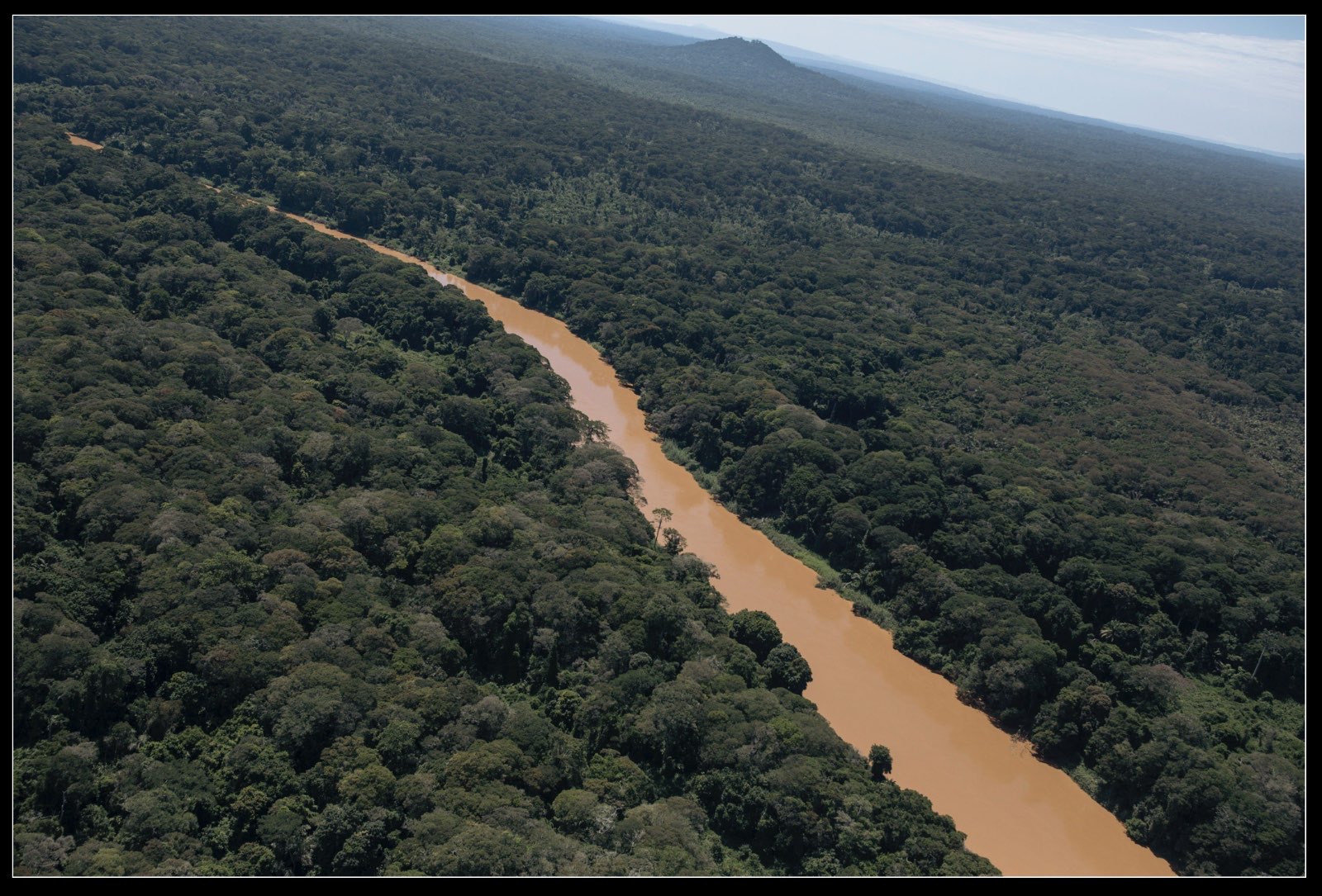
Caption: Aerial view of the Ituri River near Komanda, 8 May 2024. The dense forests along the river have become a key rear base for the Allied Democratic Forces (ADF), from where the group frequently stages attacks on nearby roads and settlements.