
The Danger of Simplifying Sudan’s War
In
The mass atrocities in El Fasher marked a turning point in the international perception of the war in Sudan and translated into policy action: in a parliamentary resolution, the Belgian majority parties called on governments to take diplomatic action in Sudan.
*****
The Danger of Simplifying Sudan’s War
The mass atrocities in El Fasher marked a turning point in the international perception of the war in Sudan and translated into policy action: in a parliamentary resolution, the Belgian majority parties called on governments to take diplomatic action in Sudan. Meanwhile, both the theatre of war and the economic stakes of the war continue to shift. The RSF’s capture of the strategic oil field of Heglig has further weakened the already devastated Sudanese economy. Diplomatic initiatives, including American involvement, which is publicly presented as a possible breakthrough, have failed to stop the violence. Drone strikes and ground battles continue to claim lives and drive civilians to flee.
The war in Sudan is finally back in the spotlight. But this renewed attention also threatens to reduce what needs to be explained. It focuses on clear-cut perpetrators and external support, thus narrowing a structural and historical violence down to a story with a single culprit. The war in Sudan cannot be explained – and certainly not ended – by highlighting a single actor.
There is broad international consensus that the paramilitary Rapid Support Forces (RSF) have committed large-scale atrocities, with external support, mainly from the United Arab Emirates. Sanctions and attempts to cut off arms flows are therefore absolutely necessary. But anyone who reduces the conflict to this misunderstands it.
This is not a struggle between a “demonic militia” and a “legitimate state”. Nor is it a technical problem that can be solved by neutralising one armed player. The violence is rooted in deeper historical, social and political structures. Ignoring these means repeating previous failures in Sudanese transitions.
Proxy battlefield
Sudan is often portrayed as a proxy battlefield, where Gulf states compete for influence and raw materials are plundered. This interpretation is partly correct, but incomplete. Political violence and militia formation have characterised Sudan since independence (1956). Wars in the South, the Nuba Mountains, the East, and Darfur (in 1955, 1984, 1992 and 2003, respectively) preceded both the RSF and the current geopolitical interference. Reducing today’s war to an external conspiracy erases that past and obscures state-building struggles.
Economic analyses also fall short. These analyses indicate who pays and who profits, but not why violence finds local support. Identity, experience and moral claims are at least as decisive. In many regions, violence is seen as the result of prolonged marginalisation, insecurity and state absence — not as an elite game in Khartoum.
This tension is visible in policy, but also in media coverage, which focuses solely on the RSF as the absolute evil. There is a belief that eliminating them would automatically bring peace. That may be a comforting thought, but it is wrong. The frame of “rogue militias and illegal weapons” ignores the social and political dynamics that keep the conflict going: the conflict is simultaneously an elite conflict over control of the state, a local struggle over security and recognition, and a historical continuation of Sudan’s militarised governance.
The perception of violence also varies greatly. In Khartoum and other privileged regions, the RSF is seen as an existential threat to the state. In parts of Darfur and Kordofan, it is the state — and the army — that is associated with violence, arbitrariness and a lack of services. Based on this experience, the Sudanese Armed Forces (SAF) are often seen as predatory. Policy choices based on a strong moral hierarchy – between the RSF and the army – therefore lack legitimacy.
A military solution is therefore an illusion. An SAF advance in Darfur or Kordofan would, even with external support, cause massive civilian suffering and render those regions ungovernable. Sudan has experienced this before. In what later became South Sudan, the army controlled cities, but authority collapsed outside them. A repeat would deepen the fragmentation, not resolve it.
In essence, this is a war between two illegitimate forces, with real socio-political causes. Neither the SAF nor the RSF offers a democratic or sustainable perspective. Treating one as the “lesser evil” risks perpetuating a familiar pattern of militarisation, exclusion and renewed collapse. Only a civilian-led transition, national reconciliation and thorough reform of the security sector offer any prospect of a way out.
For Europe, staying out of it isn’t really an option. After Omar al-Bashir got kicked out, international support for democratic reform was slow and hesitant, which made a military backlash possible. Sudan is key for migration flows in East Africa, for stability in the Horn of Africa, and for the flow of international trade via the Red Sea. If things stay unstable, it’ll have an impact outside Sudan too.
Attention to RSF atrocities and their external support is necessary, but thinking that this is sufficient is precisely the risk. This is not a war driven from outside, but a civil war whose interests have become intertwined with those of international sponsors. The only way out is to support an inclusive, locally anchored political process and genuine security sector reform—if there is to be any hope of Sudan surviving this war in unity.
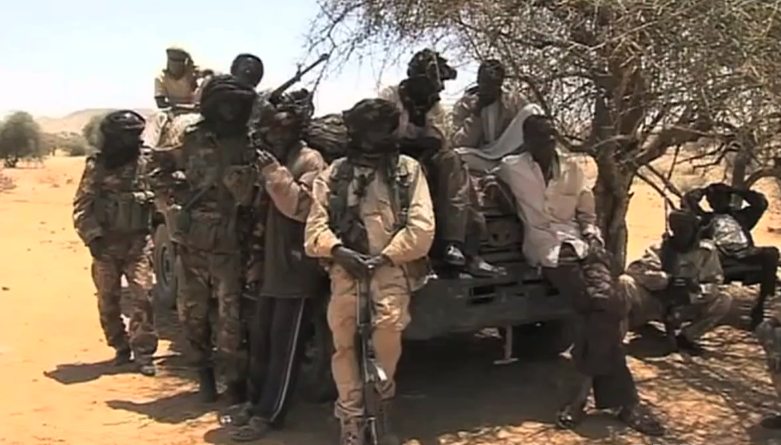
(Photo credit: Wikimedia Commons)