
The European Parliament Compels the EU to Address Arctic Security
In
The European Parliament, by an overwhelming majority, urges the European Union to adopt a robust and security-focused Arctic strategy. It stresses that the Arctic is no longer a remote periphery, but a frontline for European security, especially due to Russia´s militarization and China´s influence.
*****
The European Parliament Compels the EU to Address Arctic Security
The European Parliament, by an overwhelming majority, urges the European Union to adopt a robust and security-focused Arctic strategy. It stresses that the Arctic is no longer a remote periphery, but a frontline for European security, especially due to Russia´s militarization and China´s influence. The EP is very critical towards EU´s current Arctic which it considers outdated and insufficient. EP´s call aims to address existing gaps in the EU’s current Arctic policy. particularly regarding geopolitical and security considerations. In response to the EP request, the EU’s forthcoming revision of its Arctic policy should serve as an opportunity to decisively address security challenges and effectively close existing gaps. European security is dependent on Arctic security. The stakes are high. If the EU fails to act, others will shape the region´s future. The Arctic is no longer distant. It is Europe´s strategic imperative.
Having been the EU’s first Ambassador at Large for the Arctic, I continue to be impressed by EU´s significant role as an Arctic actor in the region. EU´s strong engagement on the file, to the benefit of the Arctic region and its peoples, is a fact. The EU plays a key role in the Arctic, focussing on tackling climate change, promoting sustainable development, and strengthening international cooperation. Well-known is EU´s strong support to Arctic science and innovation, the EU being today the largest funder of polar research. Additionally, the EU actively promotes inclusive, sustainable development and regional integration in the Arctic. The EU has stepped up its Arctic activities in light of recent events. The EU is increasingly focused on geo-economic issues affecting its strategic autonomy, particularly related to critical resources and energy security, and is engaging more actively with stakeholders at the local level, especially Indigenous populations and Arctic youth.
The EU’s updated Arctic Policy, released in October 2021, introduced an important emphasis on security and geopolitics. Despite this innovation, these policy objectives have yet to be fully implemented in practice. Following Russia’s invasion of Ukraine in 2022, the EU shifted its focus toward broader European security, demonstrating unity and proposing measures to strengthen defense capabilities. This development should have prompted increased EU attention to Arctic security. However, Arctic security remains largely absent from EU´s agenda, a fact that has not remained unnoticed by the EP, on the contrary.
The EU’s role in Arctic security is crucial, as European security is closely tied to stability in the region. Traditionally being an area of cooperation, the Arctic is now experiencing rapid change due to climate shifts, with an impact on geo-economics and geopolitics. The region has become increasingly accessible and suitable for development, leading to heightened global interest and engagement, also from non-Arctic states. The region provides critical resources vital for Europe’s strategic autonomy. Additionally, Russia’s heavy militarisation of the Arctic including the deployment of nuclear weapons, in combination with China’s clear interest in the region and its growing military cooperation with Russia, have heightened tensions and undermined regional stability.
The EP resolution on EU´s diplomatic strategy and geopolitical cooperation in the Arctic was adopted with overwhelming majority during the EP plenary session of 26th November 2025.
It has been initiated by a long-time strong Arctic advocate within the European Parliament, rapporteur Urmas Paet (Renew, Estonia) who stated: « In recent years, we have experienced significant turbulence in world politics. This is having a clear effect on the Arctic region. The EU needs a smart strategy to face the optics growing geopolitical importance”.
Melting sea ice, newly accessible maritime routes, and intensified geopolitical competition, have turned the region into a frontline of hard security, economic vulnerability, and systemic climate risks. The EP stressed that the Arctic today is marked by Russia’s rapid military build-up, including the reopening of Soviet-era bases, strengthening air and naval assets, and expanding- submarine based deterrent under the Bastion doctrine [1]. At the same time, China expands its influence with dual-use research, port projects, digital infrastructure, and its self-proclaimed role as a “near-Arctic state”, most visible through its Polar Silk Road initiative.
The message from Members of the European Parliament (MEPs) is unequivocal: Europe can no longer treat the Arctic as a distant, exceptional zone of cooperation. It has become central to Europe’s strategic posture, critical infrastructure resilience, and long-term geopolitical influence.
Europe’s current Arctic Policy is outdated and insufficient
A core theme across political groups was a shared conviction that the EU’s existing Arctic policy is no longer fit for purpose. Particularly, the 2021 EU Arctic policy does not reflect the new security realities that the Union is confronted with today. In the EP’s view, the European Commission and the EEAS have failed to adapt quickly enough.
The most pointed criticisms include:
- Insufficient focus on hard security: According to the EP, the current strategy emphasises sustainability and cooperation, but lacks concrete mechanisms to address military build-up, hybrid threats, and the protection of critical infrastructure.
- Limited Arctic domain awareness: MEPs stressed Europe’s inadequate surveillance capabilities, including monitoring of undersea cables, pipelines, and maritime activity.
- Slow strategic adaptation: It is stated that the EU has been reactive rather than proactive, particularly regarding Russia’s growing military footprint and China’s long-term economic and technological influence
- Underdeveloped partnerships: The EP argues that the EU has not sufficiently leveraged its relationships with key Arctic actors, such as Norway, Iceland, and especially Greenland, nor fully explored closer strategic alignment with them.
Consensus on the Need for a New Strategy
Despite political differences on the appropriate balance between deterrence and diplomacy, there is broad cross-party consensus on one point: the EU needs a new Arctic strategy, which is clearer, more operational, and focused on security.
MEPs underlined several priorities for such a strategy:
- A security-centered Arctic approach: Europe must develop the capabilities to detect, deter, and respond to threats in the High North. This includes improved maritime and air surveillance, cable and pipeline protection, secure satellite communications, and a stronger presence in the region.
- Deepened cooperation with NATO and the United States: With Finland and Sweden, now NATO members, the Arctic is formally part of the Euro-Atlantic security space. Cooperation with NATO is seen as essential and not optional for maintaining stability and countering Russian and Chinese activities.
- Diplomatic leadership: MEPs across the spectrum called on the EU to revitalise its diplomatic presence and to become a more assertive Arctic actor. This includes strengthening ties with Norway, Iceland, and Greenland.
- A climate policy integrated with security objectives: MEPs stressed that climate impacts are no longer merely environmental but also geopolitical. A revised EU approach must therefore integrate climate adaptation, research investment, and infrastructure resilience alongside traditional security tools.
- Commitment to international law and multilateralism: MEPs insisted that the EU must champion the United Nations Convention on the Law of the Sea (UNCLOS), resist unilateral territorial claims, and support cooperation frameworks. Additionally, Indigenous participation must be central.
An Opportunity and Responsibility for Europe
The debate revealed a deeper political insight: the Arctic is a test for Europe’s strategic maturity. If the EU aims to be a geopolitical actor, it cannot allow others – Russia, China, or even the United States – to define the Arctic’s political and economic trajectory. Europe’s northern flank is now inseparable from its collective security, digital resilience, energy independence, and access to critical raw materials.
The opportunity is significant. The EU can lead on sustainable development, scientific excellence, and rules-based governance. It can shape resilient supply chains with trusted partners and support local communities as they navigate unprecedented change. But this will only be possible, if the EU acts decisively and with unity.
Acting Before Others Decide the Future
The EP’s resolution marks a pivotal moment. It sends an unmistakable message to the European Commission, Council, and EEAS: the time for incremental adjustments is over. In an Arctic, defined by accelerating militarisation, environmental upheaval, and rising strategic competition, Europe must update its strategy, strengthen cooperation with allies, and assume the role of a principled, capable Arctic actor.
The EU has announced a potential revision of its Arctic policy. This is part of Europe’s responsibility. Several Arctic and non-Arctic states have already reassessed their approach in the Arctic considering security challenges that impact the region. Finland just redefined its Arctic strategy, “Finland´s Arctic Foreign and Security Policy” (November 2025), defining the country as a trusted partner in Arctic security and expertise. It is urgently needed for the EU to catch up.
The stakes are high. If the EU fails to act, others will shape the region’s future on terms that may undermine Europe’s security, values, and long-term interests. The Arctic is no longer distant. It is Europe’s strategic imperative.
[1] The Bastion doctrine is a naval strategy, originating with the Soviet Union, to protect its ballistic missile submarines (SSBN´s) reason within the heavily defended, near home waters.
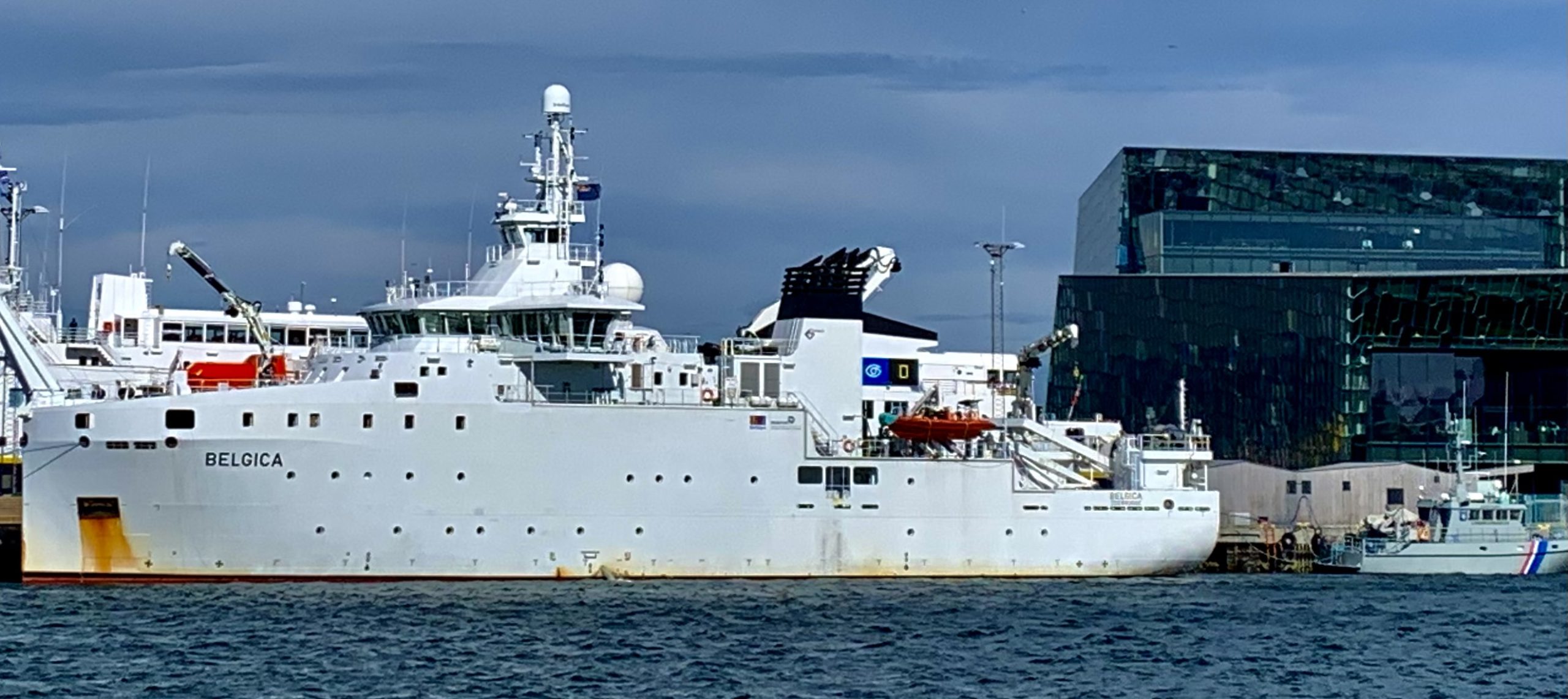
(Photo credit: Marie-Anne Coninsx)