
Why Does Peace Not Come to the DRC?
In
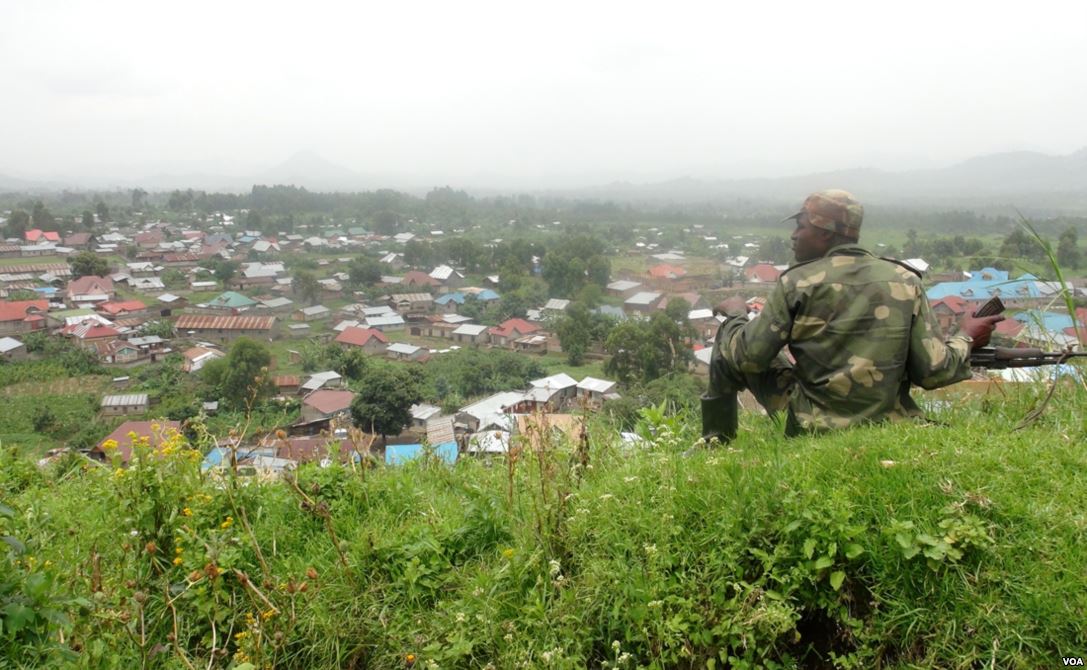
On December 10, 2025, the city of Uvira fell under the control of the Rwandan supported AFC/M23 rebel force, just six days after a ratifying ceremony of a peace agreement between the Democratic Republic of the Congo (DRC) and Rwanda, brokered by President Donald Trump.
Why Does Peace Not Come to the DRC?
On December 10, 2025, the city of Uvira fell under the control of the Rwandan supported AFC/M23 rebel force, just six days after a ratifying ceremony of a peace agreement between the Democratic Republic of the Congo (DRC) and Rwanda, brokered by President Donald Trump.
Despite the multiplication of condemnations, communiqués and calls for dialogue, none of the warring actors have expressed their genuine interest in de-escalation: the Congolese government demands sanctions and international pressure on Rwanda; Kigali justifies its actions through the alleged need to protect Tutsi populations and to counter the FDLR.
International players have again recycled formulas about dialogue and respect for agreements while remaining unable to alter the real cost of war for those who are deeply involved in it. This existing disconnect stems from a flawed assumption: the idea that peace is a readily available option, blocked only by a lack of political will or by inadequate mediation.
Today, there is a drastic reduction of available options for negotiated peace though. It leads to a brutal alternative: the choice is now between either a military intervention of a significantly more imposing force capable of ending massive violence and thus creating the necessary space for a political solution, or the tacit acceptance of the continuation of regional conflagration and a lasting normalization of war, including large-scale suffering of Congolese civilians. Considering the lack of such force, the second option appears to be steering the near future.
Three incompatible scenarios
Major actors are contemplating how to end the conflict. Three different options have emerged, highlighting the reasons for the current stalemate in direct negotiations between the Congolese government and the AFC/M23 rebel movement:
The first one is the option of sovereignty. Favored by the Congolese government, it suggests that the AFC/M23 withdraw from occupied areas and that Rwanda retreats its troops, allowing the DRC to reassert its monopoly over security and governance, either directly or through international partners such as MONUSCO. Kinshasa argues for its territorial integrity based on constitutional grounds, international law (however absent this might seem today) and a UNSC resolution.
This approach faces significant challenges, though, including the lack of effective international pressure on Rwanda to cease its territorial violations. At the same time, such scenario is unacceptable to AFC/M23 elites, who likely view the current moment as a last opportunity to convert long armed careers into institutionalized political power. The sovereignty scenario therefore appears more of a normative projection rather than a realistic solution.
The autonomy scenario presents itself as an intermediate solution: recognizing, de facto, a zone under AFC/M23 control with some form of separate administration, potentially under UN oversight. Such a formula would reassure Rwanda, whose central objective is to preserve a durable indirect grip on eastern DRC, rooted in a security doctrine that portrays threats as constantly emanating from across the border, and economic agendas.
Such autonomy, which echoes the AFC/M23 call for federalism, is largely rejected by Congolese society and is seen as a reward for an armed group that is largely viewed as a Rwandan proxy. It also conflicts with the centralized structure of the Congolese state and would require a major change of the Congolese constitution.
The third scenario is even more controversial and pushes the logic to the limit: an explicit or de facto partition or balkanization of the eastern part of the country. For some actors – segments of the M23, certain eastern Congolese elites, and the Rwandan leadership – partition promises a radical solution to the blockages created by hyper-centralization in Kinshasa and by the concentration of power in the hands of specific elites.
This option could benefit both the AFC/M23 and Rwanda, as it opens the way to new political entities where these actors could hold a dominant position, while anchoring the region more deeply in economic and security dependence on Rwanda. Yet this option is unacceptable to most Congolese, destabilizing for the regional balances (especially given the latent rivalry between Kigali and Kampala), contrary to African Union norms that strongly resist any direct challenge to colonial-era borders and in conflict with international law.
None of these scenarios currently offer a viable path to peace or stability. They embody mutually exclusive projects, each implying an existential defeat for one or more of the different parties involved. The consequence is strategic paralysis and continued warfare.
For the Congolese state, the impasse is evident. Despite reforms and higher defense spending, the Congolese army does not have the capacity to defeat the AFC/M23, while domestic opinion makes any meaningful territorial or political concessions amount to betraying national sovereignty and jeopardizing the regime’s legitimacy.
Conversely, the AFC/M23 possesses a real military advantage due to disciplined organization and external support, yet it lacks political legitimacy, being viewed largely as a Rwandan instrument rather than a Congolese coalition. Accusations of large-scale crimes against civilians have equally damaged its credibility. Disarmament without strong guarantees over the fate and political future of its leadership would come down to accepting political marginalization.
Rwanda, too, is caught in a strategic impasse. It has derived significant geopolitical and economic benefits from its long-term involvement in eastern Congo yet faces mounting international and domestic costs. It fears that relinquishing indirect control over the region would undermine a core pillar of its security doctrine and regional strategy.
The deployment of an external force to protect civilians?
The current DRC’s conflict thus appears structurally impossible for negotiation. It forces to consider an alternative solution, which would be the deployment of an external force capable of enforcing a new balance of power rather than a negotiated compromise. The core objective of such force is not to impose a lasting peace but to put an end, even temporarily and imperfectly, to massive violence including daily killings and mass displacement. It is one of the few options left to put a halt to the current logic in which armed actors negotiate their interests while the population negotiates its survival.
For such force, the option defended by the DRC that is based on sovereignty, stands out as the only one with a minimal political, legal, and diplomatic foundation. It remains the only principle from which an imposed peace can be legitimized, organized, and stabilized, and it aligns with existing legal norms and recent diplomacy. Even more, UN Security Council resolutions and African Union–led processes all stress respect for the DRC’s territorial integrity, recognize Kinshasa as the legitimate interlocutor, and affirm that this principle is non-negotiable. Other options—such as enduring autonomy for AFC/M23-controlled areas, outright balkanization, or maintaining the armed status quo—are politically or morally indefensible, legally fragile, and strategically explosive.
The question, then, remains which external actor or force would be capable of and willing to impose such new balance of power in the DRC? The options look rather bleak. Since the resurgence of conflict in 2021, various external actors have engaged in managing the crisis, but none have successfully redefined existing power dynamics. The EU is divided and politically hesitant, constrained by internal disagreements and Rwanda’s lobbying, with Belgium’s attempts to advocate for a sovereignist scenario leading to international marginalisation. African institutions, including the AU, limit themselves to generic calls for peace, while SADC’s military backing for the DRC has been too modest to halt the RDF-M23 offensive. Qatar’s mediation lacks the leverage to impose any potential agreement on negotiating parties. And although the United States seek to engage as a peacemaker, the fall of Uvira after the Washington peace deal underlined its reluctance to bear the costs of robust coercive action when immediate strategic returns appear limited.
Or a normalization of an endless war ?
When no external actor is prepared or able to assume the role of a powerful force capable of redefining the balance of power in favor of Congolese sovereignty, peace will remain elusive, and the costs of inaction will become increasingly irreversible.
In the end, this underscores the tragic dimension of the current crisis: it is not just about the absence of peace but about the gradual acceptance of war as a sustainable horizon. The real scandal is not the failure of agreements but the normalization of the Congolese sacrifice as a variable in regional interests and regime calculations.
One can understand—without excusing—the security logic of Rwanda, its obsession with strategic depth, fear of cross-border enemies, and the instrumentalization of FDLR as part of a survival doctrine. Similarly, one can acknowledge the claims for the protection of marginalized communities, particularly Congolese Tutsi caught in cycles of violence and ethnic rhetoric. However, no security rationale justifies occupation, violence, predation, and mass displacement. Protecting minorities cannot be a license for war; it must become a controllable, verifiable objective guaranteed by non-partisan mechanisms.
The central political choice – for internal as well as external actors – is not about abstract support for peace. It is about a willingness to bear the cost of a decisive break with a violent order that, for three decades, has tolerated the construction of some states’ security on the permanent insecurity of others.
The international community must stop being a moral spectator and become a political actor again: not by multiplying speeches, but by imposing costs on warring parties and ensuring protection of Congolese civilians. It should invest in an external force that is able to impose a new balance of power rather than broker a negotiated compromise. Such new balance of power, in the end, should help building the only sustainable basis for lasting stabilization, which is a reformed, responsible yet sovereign Congolese state that is capable of and willing to protect all its citizens.
The choice today is between a peace that protects lives and a façade peace that protects positions of power, even if that means accepting an endless and “manageable” war in eastern Congo.
(Photo credit: Wikimedia Commons)