
Is South Sudan Heading Towards Another Civil War?
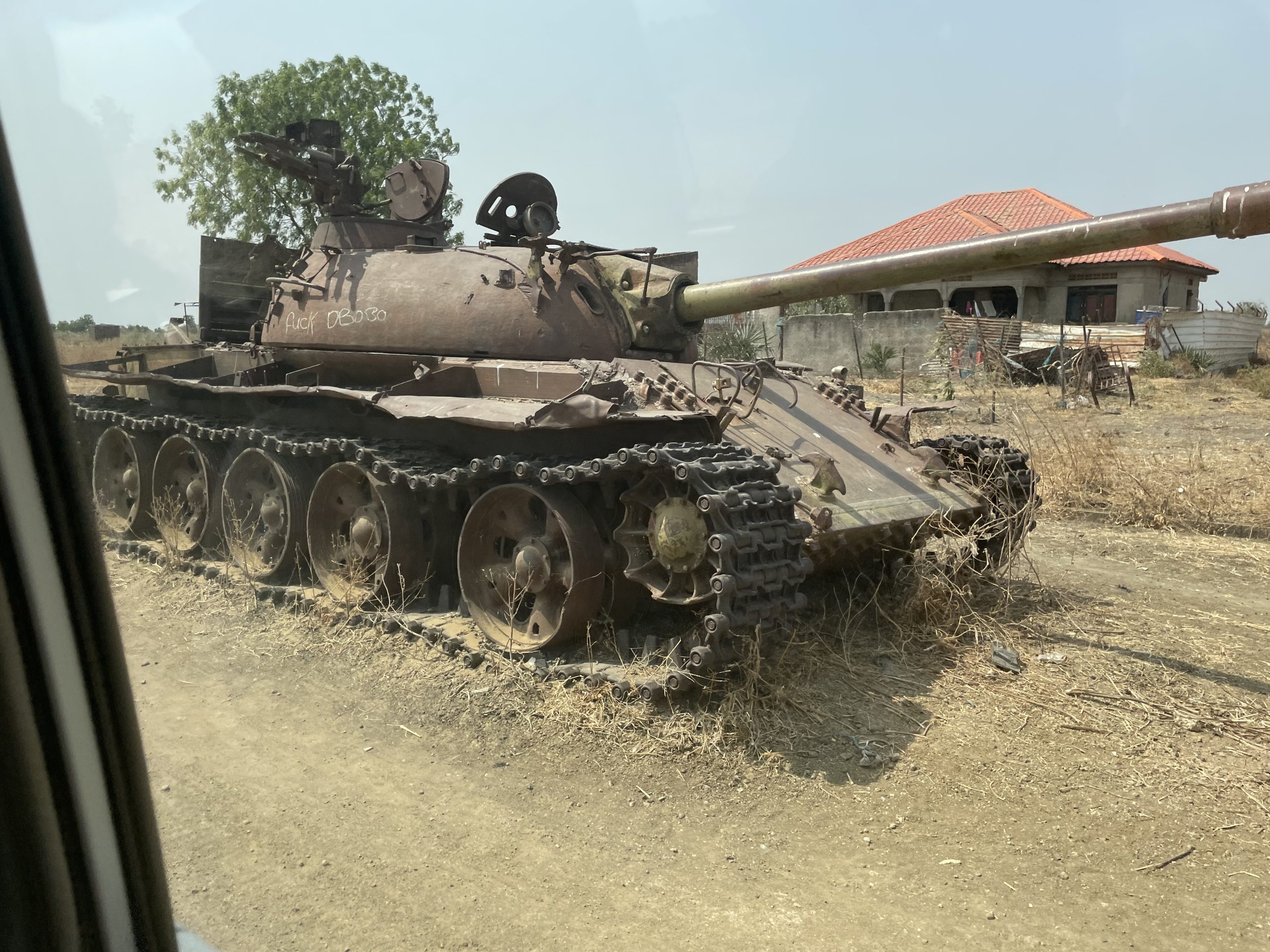
In
South Sudan’s brief appearances in the international spotlight in 2024, from its basketball team’s performance at the Paris Olympics to the further postponement of presidential elections to December 2026, have obscured a steadily deteriorating political and security situation.
Is South Sudan heading Towards Another Civil War?
South Sudan’s brief appearances in the international spotlight in 2024, from its basketball team’s performance at the Paris Olympics to the further postponement of presidential elections to December 2026, have obscured a steadily deteriorating political and security situation. Beneath the surface, the fragile power-sharing arrangement between President Salva Kiir and First Vice President Riek Machar is fraying. If it collapses entirely, South Sudan risks sliding back into full-scale civil war, potentially intertwined with Sudan’s ongoing conflict across its northern border.
Violence has intensified since late 2024. In March 2025, a UN helicopter was attacked by the White Army, a predominantly Nuer militia with links to Machar, killing a general and several soldiers. The incident marked a decisive escalation. Kiir’s government responded by arresting senior opposition figures and launching military operations in Jonglei and Upper Nile states, long regarded as opposition strongholds. These operations, branded “Operation Enduring Peace”, have been marred by reports of senior commanders inciting troops to target civilians, drawing international condemnation. The UN Commission on Human Rights in South Sudan has warned of mass atrocities.
At stake is the Revitalised Agreement on the Resolution of the Conflict in South Sudan (R-ARCSS), signed in September 2018. Already weakened by repeated delays, incomplete security sector reform, and the failure to unify armed forces, the agreement now faces an existential threat.
Fragmentation Beyond the Dinka-Nuer Divide
The Kiir-Machar rivalry is not merely political but deeply ethnic, with both leaders accused of exploiting historical grievances to mobilise their Dinka and Nuer bases. Yet this binary framing obscures a more complex reality. Other groups, such as the Shilluk in Upper Nile and the Murle in Greater Pibor, wield significant political and military influence, complicating any simple Kiir-Machar binary. The Shilluk have oscillated between supporting Kiir’s government forces and pursuing armed autonomy, driven by local land disputes and leadership rivalries as much as national politics. Meanwhile, Murle militias engage in localised conflicts, often over cattle and resources, further complicating the security landscape, particularly in oil-producing Upper Nile state.
Equally important is the fragmentation within the Dinka and Nuer elites themselves. Power struggles among generals, governors, and security chiefs have intensified as resources dwindle and political uncertainty grows. Many local commanders operate autonomously, motivated by access to land, cattle, and protection rents rather than loyalty to Juba. This fragmentation is rooted both in the decades-long liberation struggle and in deliberate strategies by Kiir and Machar to maintain leverage over rival factions within their own ethnic bases. This internal dissent creates both risks and opportunities: whilst warlords may escalate violence independently, they could also be amenable to local ceasefires or defections if offered the right incentives. In 2020, for example, several SPLA-IO commanders defected to Kiir’s government in return for military positions and control over local revenue streams.
Civil society, church networks, women’s groups, and youth organisations continue to mediate local disputes and resist mobilisation, though their exclusion from formal processes under R-ARCSS has limited their impact. Their presence challenges the notion that violence is either inevitable or universally supported.
On 28 March 2025, March was placed under house arrest and his Machar began in late September 2025 on charges of treason and murder is widely seen by opposition figures and observers as a political manoeuvre to sideline him ahead of the 2026 elections.1 His suspension and the arrest of his allies have further polarised the country, with the SPLM-IO (Sudan People’s Liberation Movement-in-Opposition, the political wing of Machar’s rebel movement) rejecting Kiir’s dialogue initiatives as non-inclusive.
Regional Spillover and Economic Shock
The war in Sudan has sharply worsened South Sudan’s vulnerability. With around 90 percent of government revenue derived from oil exports, the disruption of pipelines through Sudan (caused by fighting between the Sudanese Armed Forces (SAF) and the Rapid Support Forces (RSF) near pipeline infrastructure) has caused exports to fall by roughly two-thirds, triggering a severe liquidity crisis. Salaries for an increasing number of civil servants and soldiers have gone unpaid, inflation has surged, and food insecurity has deepened.
In response, Kiir has reshuffled the political elite and sought external security support, most notably from Uganda, which has deployed troops to Juba. At the same time, the regionalisation of the conflict is becoming increasingly pronounced. Reports suggest that the SAF has supplied weapons to Nuer militias allied with Machar in Upper Nile. Sudan, in turn, accuses South Sudan of facilitating UAE support to the RSF through a purported field hospital near the border in Aweil East it calls “an aggression base”.
These dynamics risk turning South Sudan into a proxy battleground in Sudan’s war, with neighbouring states already taking sides and national sovereignty further eroded. Sudan’s conflict has also pushed hundreds of thousands of refugees into South Sudan, placing additional strain on already limited resources and inflaming local tensions over land and aid.
Humanitarian and Security Risks
The humanitarian situation continues to deteriorate. More than 280,000 people have been displaced in Jonglei alone, facing aerial bombardment, restricted humanitarian access, and repeated displacement. The UN has warned of famine-like conditions in several counties, whilst humanitarian agencies highlight the compounded effects of conflict, climate shocks, and chronic underfunding. These needs are growing at a time when global humanitarian financing is contracting.
Security conditions are equally bleak. The UN Mission in South Sudan (UNMISS) remains under pressure to protect civilians, but its capacity is increasingly constrained. Government-imposed no-fly zones in opposition-held areas have further restricted humanitarian access, raising serious concerns about the risk of mass atrocities.
From Symbolism to Strategy
South Sudan’s crises demand sustained international attention, not just fleeting visibility during events like the Olympics. High-profile gestures, such as Pope Francis’ 2023 visit to Juba, briefly raised hopes but yielded little lasting change. Regional mediation efforts led by IGAD have stalled, whilst calls for dialogue from the U.S. and EU, unbacked by leverage, have largely been ignored.
President Kiir’s Stetson hat, a gift from George W. Bush, serves as a quiet reminder of how invested the international community once was in South Sudan’s future. That level of engagement no longer exists, and it shows. What is needed now is not another rhetorical appeal, but a serious, empowered mediation process capable of setting out a credible plan for fair and secure elections. Such plan needs to firstly address not only Kiir and Machar but also the incentive structures that keep local commanders autonomous and armed. Secondly, it needs to restore faith in the possibility of free and fair elections. A faith that was ridiculed after Kiir was forced to revoke the appointment of a member of an election dialogue panel after it emerged that the individual had died several years earlier.
Time is not on South Sudan’s side. The rainy season (April–October) will soon render much of the country inaccessible, whilst preparations for a December election must begin immediately to ensure credibility. Further delays, or an election that is rushed, manipulated, or insecure, would almost certainly deepen instability rather than resolve it.
South Sudan must also insulate itself from Sudan’s war, particularly from military entanglements that risk turning it into a proxy arena. Simultaneously, international partners should prioritise addressing the country’s deepening humanitarian crisis. Ignoring South Sudan now will not prevent conflict later. It will only make its consequences harder to manage.
(Photo credit: Antoine Baudon)