
Allies and Rivals
In
This is strategy. Trump’s National Security Strategy (NSS), released on 4 December 2025, is bold and concise. One reads it, and one knows what the US wants. One may not agree, but the strategy is logical and coherent, moving from a clear statement of the American interest to clear lines of action.
And then one comes to the chapter on Europe, and logic and reason give way to ideology and hyperbole. Europe, supposedly, is at risk of “civilisational erasure”. By whom? The European Union. Seriously?
*****
Allies and rivals
Bully Your Friends
The Trump strategy fully reflects the strategic truth that it is much easier to bully your friends than your enemies. Under the heading of “flexible realism”, it says one can build good relations with states that do not share American values “without imposing on them democratic or other social change that differs widely from their traditions and histories”. I agree. However, when it comes to countries that do share American values, the US “will oppose elite-driven, anti-democratic restrictions on core liberties in Europe, the Anglosphere, and the rest of the democratic world, especially among our allies”.
The principle of “non-interventionism” stated at the outset of the NSS, does not apply to Europe. On our continent, the Trump strategy is to actively intervene, “cultivating resistance to Europe’s current trajectory within Europeans nations”. Who is Trump looking to: “the growing influence of patriotic European parties”. In other words, the Trump administration will continue, and likely even increase, its active interference in our elections, in support of the anti-democratic extreme-right forces, and against the EU. Let us be clear: that is a hybrid attack as unwelcome, and as threatening, as any Russian or Chinese hybrid attack against us.
Placate Your Adversaries
The NSS says the US “will need a strong Europe”, but what Trump really seeks is to undo European integration, leaving individual countries run by Trump-friendly governments that are easily dominated. Another starting principle of the NSS is to maintain a balance of power – but such a fragmented Europe will not be one of those powers.
Indeed, the power that Trump seeks to placate is Russia. “As a result of Russia’s war in Ukraine, European relations with Russia are now deeply attenuated”, says the NSS – the understatement of the year. “Many Europeans regard Russia as an existential threat” – implying that it isn’t, really. Worse, the NSS pretends that it is somehow our fault that the war continues: “The Trump Administration finds itself at odds with European officials who hold unrealistic expectations for the war perched in unstable minority governments, many of which trample on basic principes of democracy to suppress opposition. A large majority of Europe wants peace, yet that desire is not translated into policy, in large measure because of those governments’ subversion of democratic processes”. If that pernicious fabrication is the starting point, we must worry about the “significant U.S. diplomatic engagement” that the NSS promises to manage our relations with Russia. Whose interests will prevail here?
The most condemnatory language in the NSS is reserved for the EU and multilateral institutions more broadly – the document is very much not explicit on Russia or China. In and of itself, the objective of finding agreement and establishing a stable balance of power, rather than setting the US on a path towards a confrontation without end, can be positive. But Trump wants a concert of powers that decide among themselves, without strong multilateral rules and institutions, and above the heads of the lesser players – including Europe.
The US Is a Normal Country
EU High Representative Kaja Kallas reacted immediately: “We haven’t always agreed on certain subjects, but the core principle remains the same. We are the greatest allies, and we must stay united”. No, it is exactly the opposite: we will still cooperate on specific issues, but Trump has declared the core principle dead. Henceforth, the US will behave towards Europe like other states do: they are allies and rivals at the same time. We will work together on one issue, and against each other on another. That is only normal: it was naive to think that we could preserve forever the Transatlantic harmony that was shaped by the Second World War and carried over into the Cold War. There is no law of nature that says alliances cannot last – but in the history of great power politics, they seldom do.
The answer is not to downplay this – Trump means what he says – nor to think that we can wait this out – four years of Trump may well be followed by eight years of Vance. The answer is also not to give up on the alliance. But, as I have written before: only strong players can conclude advantageous alliances; weak players pay the price for their protection. The immediate lesson is this: offering concessions does not work. The supposed trade deal that the EU agreed on with the US on the Turnberry golf course last summer was a shameful surrender. And what did it get us: this NSS.
What do we do then? Decide once and for all that we are an independent pole of the multipolar world – a great power. Translate that independent mindset into military independence by building a complete European pillar in NATO – now. Assertively defend our economic sovereignty against everyone, the US included. Stay the course on Ukraine, alone if necessary. Actively block any outside interference in our domestic politics, including from the US.
If we thus demonstrate strength, we can force Trump to be transactional. If one does not force him, he is not interested in a give and take – he just wants to take. We must force Trump, therefore, to forge a balanced economic and security deal that can keep an alliance going. “An” alliance – NATO as we knew it will not come back. To our EU, NATO, and national leaders: please get used to it. The US will not always have our backs – we will nevertheless be fine, you will see – if we act now.
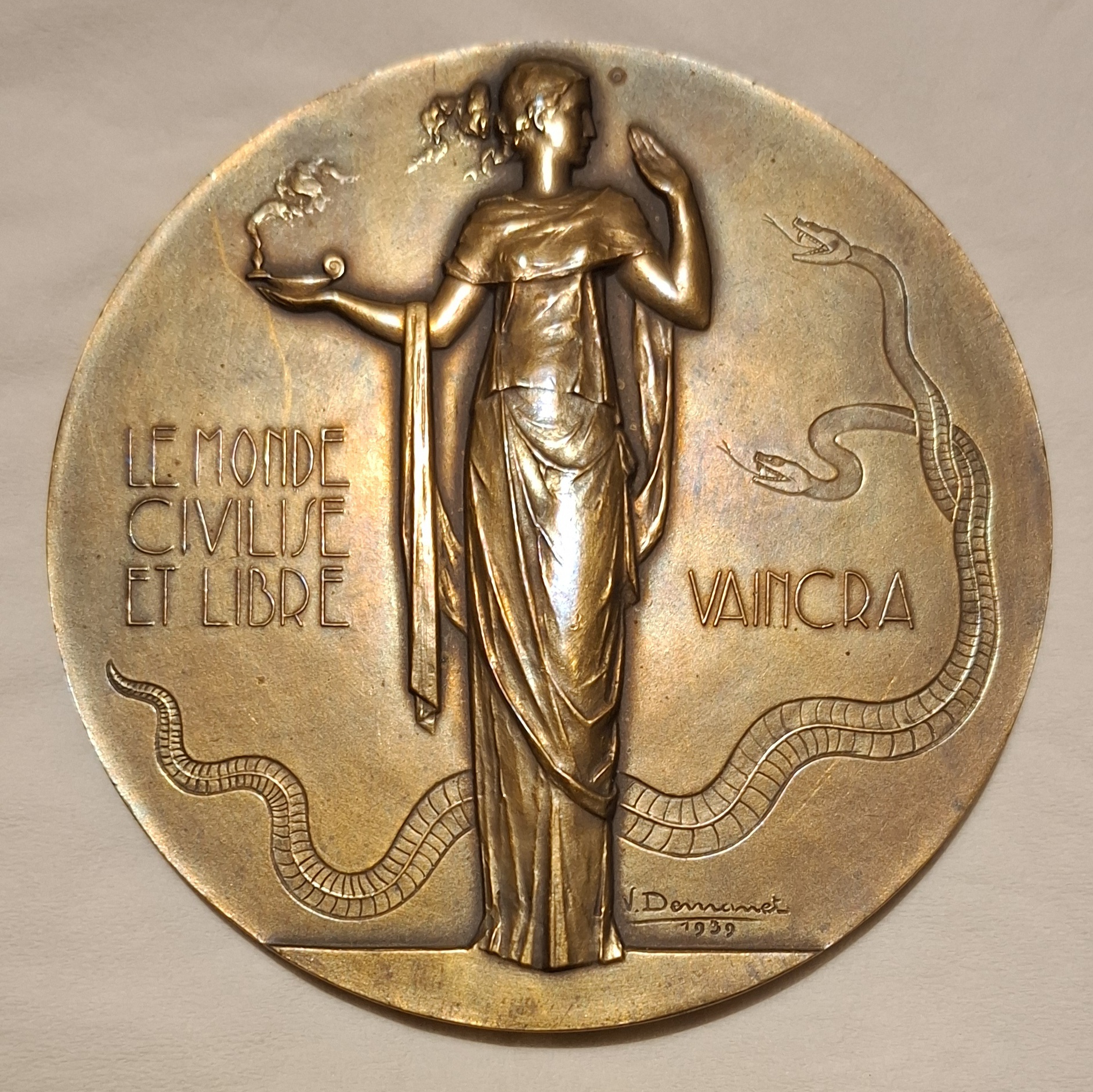
Prof. Dr Sven Biscop is the acting Director-General of Egmont and a Professor at Ghent University. He hopes that the civilised and free world will win.