
War on Iran: Tactical Success, Strategic Risk?
In
- EU and strategic partners,
- EU strategy and foreign policy,
- Europe in the World,
- European defence / NATO,
Today Turkey, not Iran, is Israel’s main strategic rival. If we agree on this, as strategists, the brilliance of the spectacular tactical display of military might, intelligence, and technology in the war against Iran that commenced a few days ago, starts to diffuse into many hazy rays
*******
War on Iran: Tactical Success, Strategic Risk?
Today Turkey, not Iran, is Israel’s main strategic rival. If we agree on this, as strategists, the brilliance of the spectacular tactical display of military might, intelligence, and technology in the war against Iran that commenced a few days ago, starts to diffuse into many hazy rays, as they beam through the unforgiving crystal ball of foresight.
Iran is akin to the “Sick man of Europe” of the 19th Century
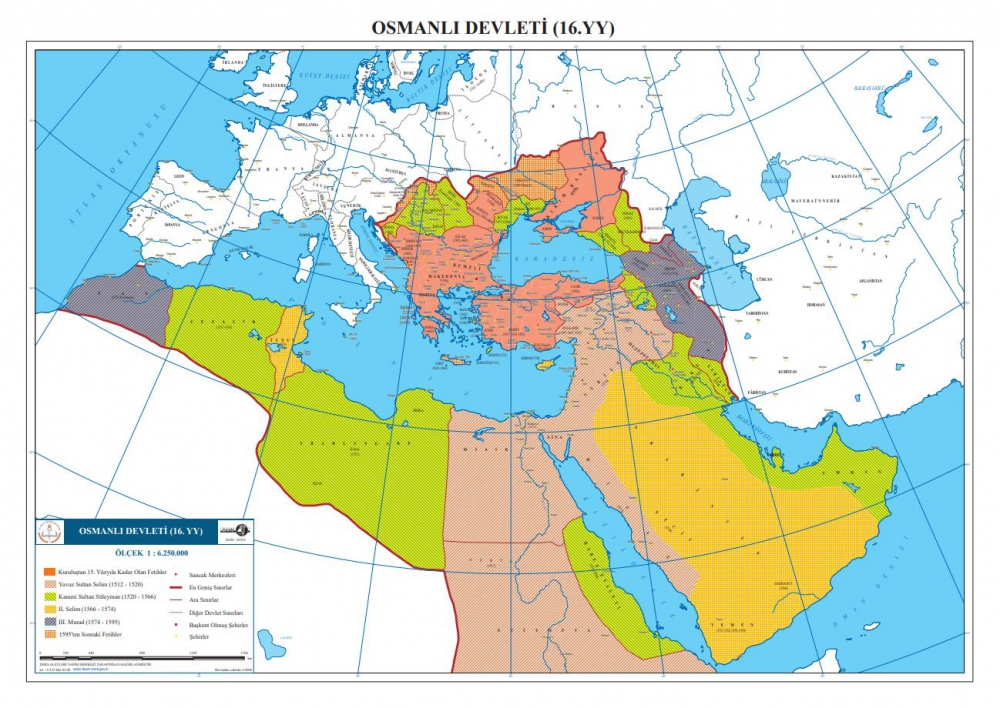
A historic analogy may be illustrative. The “Sick Man of Europe”, the Ottoman Empire, was kept alive and standing by the Great Powers because they realised that, if it collapsed, they could neither contain the impact on the European balance of power, nor could they brook Russian advances into Ottoman territory, thus upsetting that balance leading to war.
The Ottoman Empire in its last one hundred years or so could have been attacked by any of the Great Powers, or by a “Coalition of the Willing” to use a current popular formula, except that it wasn’t. The Crimean War proved the point that the Great Powers, with great strategic foresight, were not lured by tactical objectives despite the allure of their military superiority. Their strategic thinking was clear and focused on the realities on the ground: how to maintain the balance of power, how to keep Russian expansionism at bay, and how to ensure the security of their borders and maintain their influence in their respective spheres.
Iran is no longer Israel’s main strategic rival
It is of course true that Iran, for decades, was Israel’s main strategic rival and enemy across the Greater Middle East, with an avowed intent to do existential harm to Israel and damage to other Middle Eastern as well as Western states. Defeating its regime, with its instruments of terror and its nuclear capability, rightly was a key national security objective for Israel. But strategic inertia can become a millstone around the neck of policy makers if the security environment alters in a very fundamental way, yet they adhere closely to established doctrine. Israel’s leadership decided not to steer away from the tactical temptation of destroying a weakened enemy, regardless of how much the strategic environment had altered. It is akin to France or Britain pushing the Ottoman Empire over the edge in the 19th century simply because they couldn’t resist the allure of doing so. To see a long-standing, boastful, hated enemy destroyed is indeed satisfying in political terms. Strategically, however, it might have been a better long-term outcome to keep a weakened but chastened Islamic Republic shackled and contained, thus avoiding the threats that emerge from chaos, lack of control, and ungovernable spaces.
The devasting Israeli-US attacks on Iran’s nuclear facilities and air defence platforms in June 2025, and the “pager” campaign that decimated and massively weakened Hizballah, Iran’s main non-state instrument of strategic deterrence against Israel, ensured that Iran could no longer be considered a strategic threat, but rather a containable irritant.
In the meantime, Turkey’s strategically foresighted build-up of its sphere of influence in the new Syria, following the fall of Bashar Al Assad’s regime, has significantly bolstered its strategic advantage over both Israel and Iran. Turkey’s key positions as a NATO ally, a Black Sea, and a Mediterranean power, as well as its key role in any post war arrangements (regarding Ukraine) are structural strategic advantages beyond the confines of the narrow regional dynamics of the Middle East. Turkey’s military industrial capacity and the size of its armed forces are also such strategic advantages. Both Israel and Turkey are riparian Mediterranean states in close proximity, which makes the potential for rivalry greater.
Tactical brilliance is not the same as Strategic thinking
The key risk for Israel now is that it will confuse the trees of tactical success with the forest of strategic rivalry. It might be already too late to avoid certain threats from being unleashed. An implosion of central control in Tehran, i.e. a new regime that does not have full control of the territory of Iran, will mean that the borders to the east with Afghanistan and those to the west with Iraq will be effectively open. This situation will create a contiguous and continuous corridor for terrorism, organised crime, human, arms and drugs trafficking, and other nefarious activities from Afghanistan/Pakistan all the way to the Levant. Shiia Islam may well be around 10% of total Muslims; but the 250-300 million Shiia are largely concentrated along that “Af-Pak to the Levant” corridor, creating a river in which an active insurgency can swim, linking up with the estimated 50-65,000 Shiia militia in Iraq. Watch out also for IRGC commanders and officers crossing the border into Afghanistan: there should be no illusions that the Taliban will not partner with them because the former are Sunni and the latter are Shiia. They will find common cause: Shiia Iran harboured Sunni Al Qaeda fighters for many years. They could also find opportunistic common cause with ISIS/Daesh in Iraq and around the camps in Syria. None of these possible outcomes will enhance Israel’s, the region’s, or for that matter, European security.
To minimise threats, any new regime in Iran must be strong enough to prevent disintegration
If central control implodes, all scenarios lead to civil strife and insurgency, with cross-border support for the different factions from Afghanistan/Pakistan and Iraq, and beyond. This is not a nation-building operation with ground troops and civil-military work as in Iraq and Afghanistan. This is in essence an air operation awaiting a popular uprising to change the regime. This is more akin to the Libya case.
The outcome can go in all directions but much points to domestic conflict, except the one scenario in which central control is maintained. There are 190,000 IRGC members, and it may be that there will be a palace coup, in which case instability will continue as the population will remain restive, and ethnic minorities may be tempted to mount their own insurgencies. If the IRGC loses the first round, they may mount an insurgency against any incoming regime, as the former Baathists did in Iraq after the fall of Baghdad in 2003.
In addition, the restive ethnic groups, pulling centrifugally away from the centre, are also likely to find an opportunity to mount insurgencies: Kurds to the north, Azeris to the northwest, Balouch to the southeast, and Arabs to the south (in whose region 65% of Iran’s oil reserves are to be found). For millennia, Persia’s rulers’ strategic thinking remained largely unchanged, governed by Persia/Iran’s geography: dominant Persian majority in the centre, with ethnic groups pulling away from the centre. The implosion of central control may encourage these ethnic groups to take advantage, leading to long term insurgencies.
All of this means that Israel will potentially have to devote significantly more resources on an ongoing basis to combat a threat that would have been otherwise containable, whilst also trying simultaneously to balance out a formidable strategic rival, Turkey, which is flexing its muscles in Syria, the Mediterranean, the Gulf, and the Horn of Africa, which is another touch point of tension between Israel and Turkey.
Conclusion
Both the EU and the Member States will have to develop ideas and mechanisms to deal with the emerging strategic rivalry between Israel and Turkey, particularly in light of the war on Iran and how the outcomes will alter the strategic calculus of both rivals. A key factor is Turkey’s pivotal strategic positioning, including with regards to the illegal Russian war on Ukraine.
If the centre implodes in Iran, we must ready our systems to deal with the likelihood of a strong influx of terrorists and terrorist activity, as well as heightened migratory pressure. Cyprus, only 200 km from the coast of the Levant, needs the full support of the EU to deal with such threats. Two Iranian missiles in fact headed towards Cyprus, whether intended or not.
It is unclear what the US’s plans are for “the day after”, or what Israel’s plans are to contain the range of threats likely to emerge as a result of the war on Iran if the centre implodes. There is a battle of narratives to be won, too: If the Islamic Republic survives and ends up negotiating a deal, it is perfectly possible that it will claim victory, having withstood a massive assault by the mightiest armed forces on earth. This will create a weakened-yet-hostile (important and large) state that will get the US and Israel bogged down in yet another open-ended conflict, and Khamenei will be a revered martyr.
In the absence of hard power and real influence, the EU and the Member States must assume the worst and plan accordingly:
- significantly bolstering counter-terrorism resources,
- urgently countering cognitive operations and FIMI (West vs Islam type of FIMI, with Gaza thrown in for good measure),
- developing closer security and economic relations with Central Asian and southern Caucasus states to ensure that we in Europe stay on top of developments in the “Af-Pak to Levant corridor”,
- and extensively reinforcing the EU’s maritime security and interests in the Eastern Mediterranean.
The EU must also urgently develop a political framework to operationalise art 42.7 especially in light of the Iranian attacks on an EU member state, Cyprus, and the direct threats of further attacks announced by the IRGC. This is also urgent because the Treaty does not have a NATO art 4 provision for consultation and is worded significantly stronger than NATO art 5. The EU is, for all intents and purposes, on the frontline now given the EU’s extreme geographic proximity to the conflict, and the reach of Iranian missiles. Cyprus was also directly and publicly threatened by Hizbollah during its recent war with Israel. President Ursula Von Der Leyen mentioned art 42.7 twice in her speech at this last Munich Security Conference. It is time to give mutual European defence a political muscle. Strategic foresight, not tactical triumphalism, must guide policy now.
(Photo credit: Wikimedia Commons)